Where the market sits
Seattle-area retail remains one of the tighter markets in the country. Our composite of mid-2026 surveys puts metro vacancy at roughly 4%, up a few tenths from a year earlier but leveling rather than climbing, and below the long-run average. It is well above the 2022 low near 2.5-3%, so the market has loosened from its tightest point without becoming soft.
The headline hides a split by size. Roughly nine of every ten leases signed over the past year were under 5,000 square feet, and availability in that segment is under 2% across much of the region. Space above 25,000 square feet is where availability has grown, the residue of national-chain closures, and it takes longer to re-lease.
Who is leasing and what is being built
Demand is coming from restaurants, personal services, health and fitness, and recreation concepts. Fitness and recreation users have taken several of the largest boxes in the past year, including a badminton club in the Kent Valley and a pickleball facility in downtown Bellevue. Twelve-month net absorption was slightly negative, mostly because of demolitions and conversions rather than tenant failure.
Supply is close to nil. Under 300,000 square feet is under construction against an inventory near 175 million, and more than 90% of it is preleased. Deliveries over the past twelve months were in the same range. Neither Bellevue submarket has any retail underway; the pipeline is concentrated in Woodinville and a grocery-anchored project in Black Diamond.
Bellevue: downtown soft, suburban tight
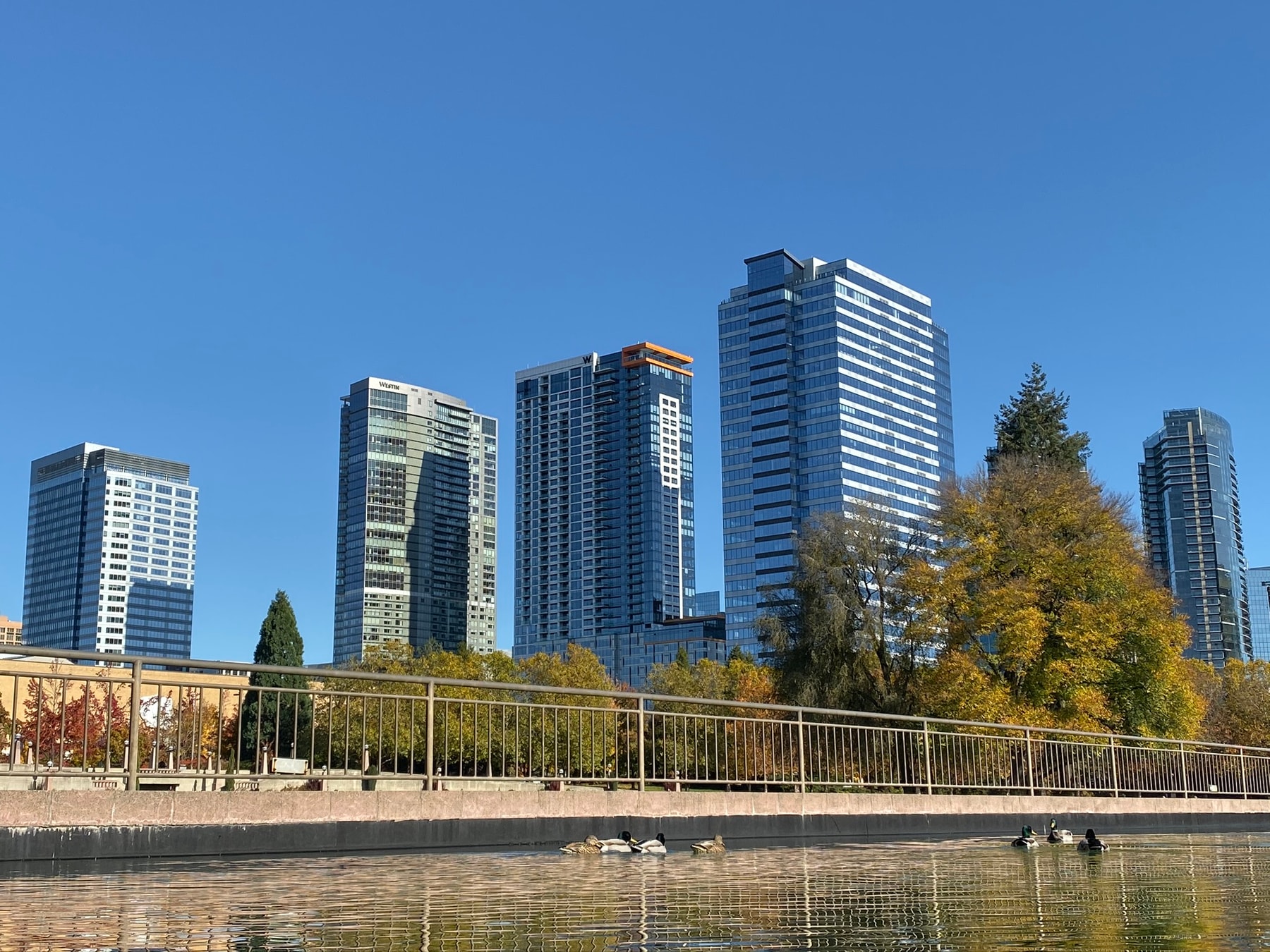
The Eastside is not one market. Bellevue CBD vacancy sits near 7%, well above its five-year average in the low 4% range, with asking rents around $50 per square foot and down 2-3% year over year as new-tower ground floors compete for tenants. Suburban Bellevue is around 3% vacant at roughly $38 per square foot, with rents off about 1%. Metro asking rent growth was under 1% over the same period, so both Bellevue submarkets are trailing the region on price even as the suburban side stays full.
Pricing and capital
Sales are picking up. Trailing twelve-month metro volume is near $1.5 billion, close to the five-year average, with pricing in the low-to-mid $300s per square foot and cap rates clustering between 6% and 6.5%. Second-quarter volume rose more than 50% year over year. The activity is led by grocery-anchored centers: Lakeland Town Center in Auburn and Evergreen Village in Bellevue both traded in July 2026 at prices in the $60-70 million range and well above $500 per square foot. Private buyers and owner-users account for close to half of volume.
What this means for owners
For families holding neighborhood or grocery-anchored centers, the market is rewarding patience. Leases signed before 2020 still roll to meaningful mark-to-market rents on small shops, and buyer depth for stabilized daily-needs assets is the best it has been since 2022. Owners of downtown Bellevue storefronts or large boxes should plan for longer downtime and stronger tenant leverage, and weigh whether a fitness or recreation user beats waiting for traditional retail. We expect rent growth to stay positive but slow, with the size-and-location gap widening rather than closing.
CMRE Partners analysis of its own data and experience, publicly available market research from national and regional sources, together with public data from the Port of Seattle, the Downtown Seattle Association, and Washington State agencies. Figures are CMRE Partners' composite ranges as of August 2026. General information only. Please contact CMRE Partners to discuss a specific matter.